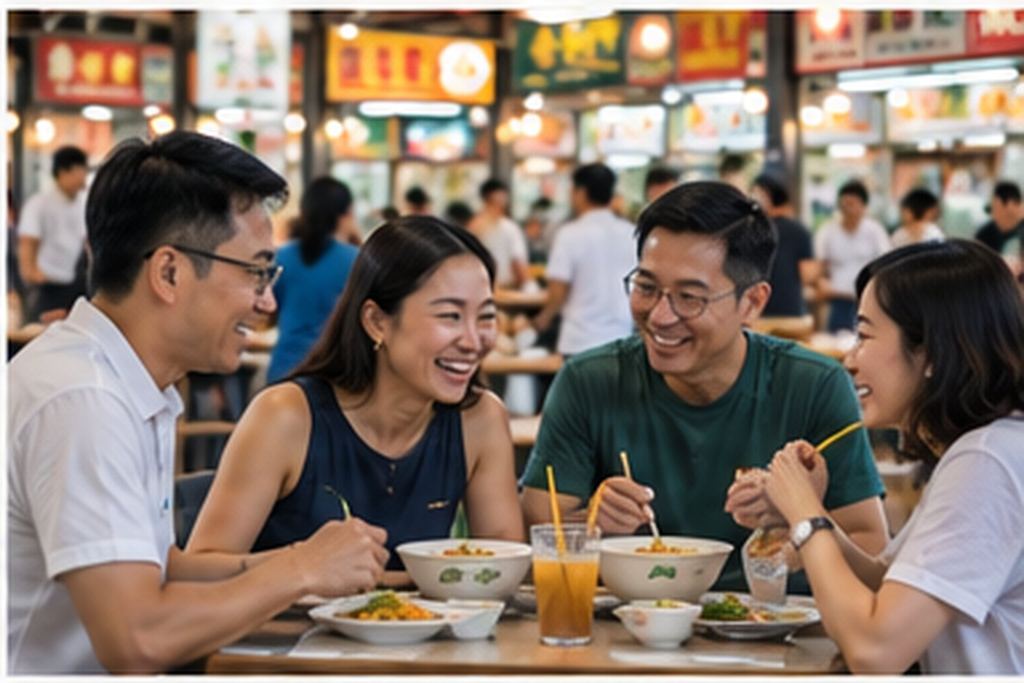
One of the least discussed changes after full-time work is the disappearance of casual contact. Colleagues, familiar faces in the lift, lunch companions and people who knew what your week contained may no longer appear automatically. Existing friendships still matter, but many were built around schedules that are changing too. Making new friends later in life is therefore less about becoming unusually sociable and more about putting yourself in places where familiarity has time to grow.
Start with repeated contact, not instant friendship
Friendship usually develops through repeated, low-pressure encounters. Instead of searching for a best friend, choose one place you can return to for six to eight weeks: a class, walking group, community activity, sports session or volunteering role. Singapore’s active-ageing ecosystem includes neighbourhood programmes intended to help people stay active and socially connected. The useful feature is not the label attached to the programme but recurrence. Seeing the same people at roughly the same time gives names, small conversations and shared jokes somewhere to accumulate.
Source: LifeSG active ageing guide ↗Keep the people you already value
Retirement can change the mechanics of old friendships. A colleague you saw every day may become someone you need to invite deliberately; friends still working may only be free at night. Make the transition explicit. Suggest a monthly breakfast, fortnightly walk or recurring meal rather than saying that you should meet sometime. Keep different kinds of relationships too. Family, former colleagues, neighbours and long-standing friends do not have to provide the same kind of companionship.

Choose activities that make conversation easier
Conversation is easier when attention is shared. Walking, gardening, cooking, heritage activities, games and creative classes give people something to do before they know one another well. This matters if conventional networking feels artificial. Pick an activity you would enjoy even if no friendship came from it. That protects the experience from becoming a social audition and makes it easier to return long enough for familiarity to develop.
Source: onePA courses ↗Use learning as a social bridge
Learning creates a particularly useful social structure because everyone arrives with a reason to talk and a reason to return. Singapore’s Agency for Integrated Care points older adults towards learning opportunities, including the National Silver Academy transition and other active-ageing learning options. Choose the format for the social experience you want: a discussion-based language class produces a different kind of contact from a self-paced online module. If connection matters, favour a recurring in-person course with some shared practice.

Volunteer where the rhythm suits you
Volunteering can widen your circle while giving the relationship a shared purpose. It is not automatically social, however. Some roles are solitary, irregular or emotionally demanding. Before committing, ask how often the same volunteers work together, whether there is a team briefing and what support is available. Begin with a small, reliable rhythm. A role that fits your energy and values is more likely to last long enough for relationships to become genuine.
Source: volunteer.gov.sg ↗Let acquaintance be a worthwhile stage
Not every promising connection needs to become a close friendship. The person who greets you at a weekly class, a neighbour you occasionally walk with and a former colleague you see every two months can all make life feel more connected. Allow these lighter relationships to count. Social networks are built from different levels of closeness, and putting pressure on every new acquaintance can make the process feel harder than it needs to be.

Build one repeatable invitation
When you enjoy someone’s company, make the next step specific and easy to decline: coffee after next week’s class, the same walking route next Thursday, or lunch after a museum visit. Repeatable invitations are especially useful because neither person has to invent a new plan each time. If an invitation is not returned, treat that as information rather than rejection. People have different capacities, family responsibilities and preferred levels of contact.
Notice when loneliness needs more than a busier calendar
The World Health Organization distinguishes social isolation from loneliness: one concerns the objective lack of sufficient social connections, while the other is the distressing feeling that relationships do not meet our needs. More activities are not always the answer to the second problem. If loneliness becomes persistent, affects sleep or mood, or makes you withdraw further, speak with someone you trust and consider professional support. Connection is part of wellbeing, not a test of whether you are retiring correctly.
This guide offers general lifestyle ideas, not mental-health advice. Community programmes and availability change. Check organisers directly and seek qualified support if loneliness or low mood is persistent or affecting daily life.
 WAYS TO LIVE
 WAYS TO LIVE
 WAYS TO LIVE